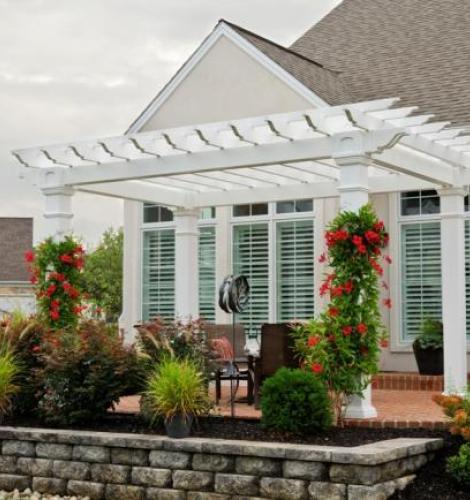
In Delaware, we frequently get high winds due to our proximity to the ocean. Late winter and early spring get a lot of wind, as well as late summer, with hurricane season. For homeowners who have pergolas, you need to ensure the structure is protected against the weather so it doesn’t fall over and cause damage during storms. Pergolas from Space Makers are designed to be sturdy, but reinforcing the structure on your own will make it stronger against harsh weather conditions. Below, we’ll detail how to protect your pergola against environmental factors before the windy seasons begin.
Protecting Against High Winds
Pergolas that aren’t secured for high winds can lift off the bases, which can be dangerous to people and the surrounding properties. Even in a sturdy structure, dealing with high winds constantly, like in Delaware, can cause the frames to bend, components to loosen, or even cause it to collapse. The lattices in our pergolas allow for wind to flow through, so there’s less pressure, unlike closed pergolas, where the wind can grab onto them and cause damage. Our pergolas are designed with durability in mind, but having that extra layer of protection makes a huge difference, making it less likely to need costly repairs after a storm. The level of protection you’ll need varies by region and state. In our area, we have to follow a code for anchoring pergolas to the foundation when we install them.
Anchoring the Pergola_0%20(1)_0.jpg)
Without secure anchoring, wind uplifts can dislodge the pergola. Having anchors will protect the structure from the wind’s upward and lateral forces. Pergolas that are attached to your home are more stable than freestanding pergolas. However, ensure that your attached pergola is secured tightly to the exterior wall for more stability. Freestanding pergolas will need a little more anchoring.
Anchoring a Freestanding Pergola
For a freestanding pergola, use a concrete footing for the posts to create a solid, sturdy base. Concrete mounts will also extend their lifespan. We recommend using metal post anchors, such as galvanized or stainless steel brackets, to secure the posts to the foundation so they don’t shift during storms. Put these at the base of each support column to secure them. In the corners, you could also add diagonal braces to distribute wind force evenly across the pergola so it doesn’t sway as much. When our team installs your pergolas, we will anchor them to the foundation per the code in our area.
Adding Weight
Our wooden pergolas are heavy, so they are more stable against high winds. If you want to anchor them further, though, you can add weight to the legs of the pergola using concrete blocks or even heavy planters. Planters are filled with heavy soil, but you can also put concrete blocks at the bottom of them for added weight. Attach them to the base so they don’t fly away during storms.
Other Environmental Protection
Shades and Curtains
When we install your pergola, our team can include a light curtain to provide some shade from the sun and privacy from neighbors when entertaining guests. However, some Delaware residents like to take this a step further and purchase a third-party curtain that is designed for windblocking. A heavy-duty, not lightweight, outdoor curtain can be attached to the pergola to block wind during storms. Make sure they are installed correctly with heavy-duty curtain rods. The bottom of the curtains should also be tied down during heavy winds so they don’t accidentally turn into sails and blow the pergola away.
Vegetation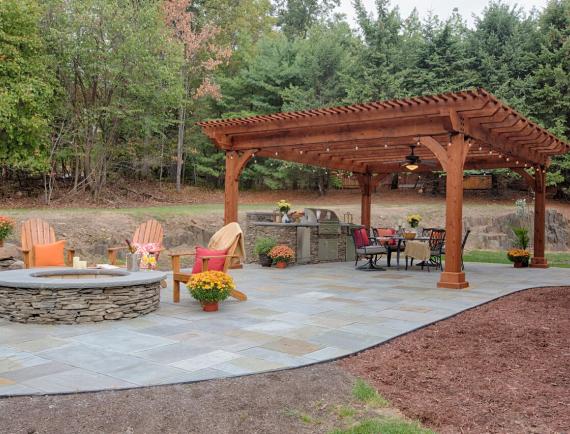
Vegetation, like dense shrubs, hedges, and trees, can be placed around the pergola as a natural windbreaker. Another benefit is that they will help boost your curb appeal. Place your plants along the side that gets the most wind. One thing to be careful with if you’re doing this is that vegetation can trap moisture. Just make sure you’re inspecting the structure regularly for signs of rot. Our Kingston Pergolas are made with cedar wood, which is naturally resistant to rot and decay from moisture damage.
Keep Up With Maintenance
Regularly maintaining your pergola, especially after a storm, will increase its longevity and improve structural integrity. Before a storm comes, make sure you inspect the pergola for any loose fastenings to make sure they are still secure. If you see any cracks, repair them with caulk or wood filler, as high winds can make them worse. Reinforce any areas that need it, specifically looking at bolts on anchors, cracks in the wood and concrete, wood rot, rusty hardware, and the concrete footings. Catching any issues and repairing them early on is vital for ensuring there are no costly repairs in the future.
Pergolas Built for Harsh Weather
Need a pergola for your outdoor living space? Pergolas from Space Makers are designed to withstand harsh weather, and adding that extra protection will make it even more durable. Our vinyl pergolas require less maintenance, but are lighter than wood ones. Our wooden pergolas are made with pressure-treated wood that is more resistant to rot. Check out our different pergola styles or view our in-stock inventory. If you have a pergola design in mind, contact us today to discuss your project.